Walking Through Casino Games Provably Fair Explained
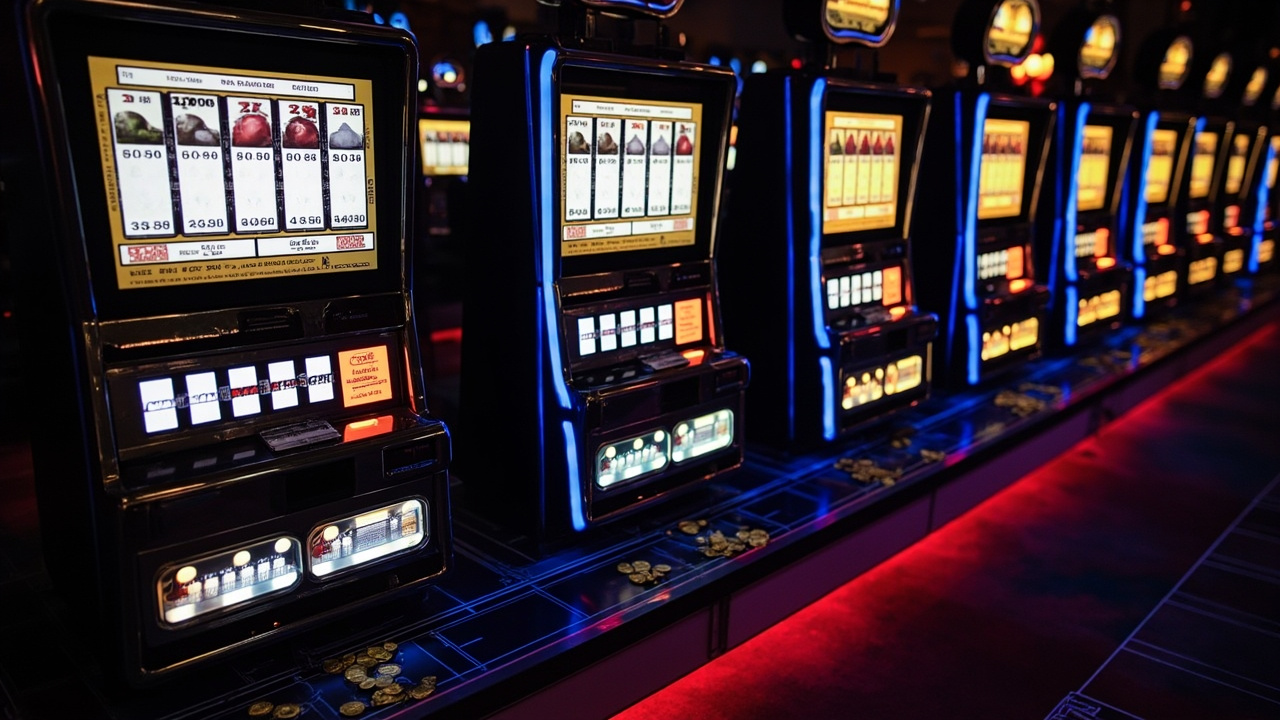
You click Spin and a nagging thought lands – how do you know that result wasn’t cooked? Casino games provably fair explained isn’t marketing fluff; it’s a system where every outcome can be independently checked by the player. Crypto casinos publish the maths behind each draw, so anyone can audit a spin without trusting the house. Here’s what you actually see, click, and verify during a real session. For Aussie punters who’d rather watch than wade, https://spinsamuraireviews.org/ covers the same ground in plain English.
What Provably Fair Actually Means
The maths behind provably fair is a small handshake between your device and the casino’s server, replayed after every bet. The casino publishes a server seed and shows you its hash before play. When you spin, your browser contributes a client seed, the two combine through a deterministic formula, and the result lands – behaviour identical for every player and every wager.
Back when I was building Megaways for Big Time Gaming, every reel position had to land independently on every spin – no patterns, no memory, no favouritism. Provably fair systems demand the same honesty, except they prove it on the page rather than asking you to trust the studio. I used to call that shift “showing the working” – a phrase maths teachers would recognise.
You verify any past result by pasting both seeds into the casino’s third-party checker. Green tick: draw was legitimate. Red flag: tampering, and the operator wears it. That level of transparency was unthinkable when browser pokies first landed, with results living entirely inside closed servers.
Grace Parker, Product Analytics Lead at Boomerang Gaming Insights, frames it neatly: “Provably fair isn’t a guarantee of winning – it’s a guarantee the draw was what the maths said. Players who blur the two end up disappointed.”
How a Player Encounters It Day-to-Day
The actual player experience is quieter than the maths suggests. Once you know what to look for, the system becomes a habit rather than a homework assignment.
Verifying a Spin or Hand
After any bet, the casino’s bet history page lists the unhashed server seed, the client seed your browser contributed, and the nonce that counted the bet. Copy those three values into the casino’s verifier, hit Check, and the tool replays the draw. A green tick means the result was produced exactly as published; a red flag means the operator can’t show the working, which is rare but not unheard of on unregulated sites. A mate in Maitland reckons he only bothers verifying after a loss above fifty bucks – a fair-enough rule, since most of the time the result is plainly the maths catching up with variance.
Reading the Seed Reveal Window
The clever bit is what happens between bets. When you next rotate the client seed, the casino reveals the previous server seed in full, so you can recheck every game played under it. That rollover is the system’s lock – while a seed is active, only the hash is public; once it rotates, the raw value is exposed and any unverified bets become permanently auditable. It reminds me of how Megaclusters carved solid clusters into smaller cells mid-cascade: the visible outcome looks bigger than the underlying pieces, but every piece can still be checked. Most platforms rotate seeds every few hundred bets or whenever you log out, which is defo frequent enough for casual play.

When Something Looks Off
If the verifier returns a mismatch, the platform is on the hook. Reputable operators publish a dispute path – usually a support ticket plus a public ledger entry – and they’ll either explain the discrepancy or refund the bet. Sites that bury or ignore the issue tell you everything about their licence and their future.
For Australian players, this is where the practical line gets drawn. Real-money pokie play is restricted in Western Australia to Crown Perth, and offshore crypto casinos are not licensed by any Australian regulator, so the verification tool is the only protection between you and a black-box result. A quick check after a big loss costs nothing and takes ten seconds – anyone playing offshore should treat it as standard.
Player Fit: When the Check Matters
For casual players spinning ten bucks an arvo, provably fair verification is more curiosity than tool – the maths is sound at every licensed venue. The picture changes when a session turns serious: high-roller tables, big crypto deposits, or anywhere a single disputed hand could cost four figures.
The host tracks your “theoretical loss” rather than what you actually spent, so a quiet blackjack session can earn fewer comps than a wild thirty-minute punt. Bright reds and warm oranges dominate casino carpet and signage because they keep the heart rate climbing and sessions stretching – the same trick works online, where the verification panel replaces the carpet.
Crown venues in regional NSW – like the Coffs Harbour racing club floor and Tamworth Community Gaming Centre – operate under state regulation, with RNG audits handled behind the scenes. For offshore crypto tables, the responsibility shifts to you. As Matilda Harris, Customer Experience Lead at Ironbark Compliance Advisory, puts it: “The verifier is the receipt. If a platform won’t show its working, walk away before you load another deposit.”
Live dealer formats such as live baccarat fair go can be verified hand-by-hand, suiting players who want human dealing alongside provable maths.
Provably fair won’t change whether your number lands, but it makes the loss yours and only yours. Spend a minute learning your platform’s verifier before you load a serious bankroll, and you’ll know the maths, the seeds, and the receipts. For anyone who reckons a fair go matters more than a flashy lobby, that’s a habit worth forming on a quiet Sunday arvo – no worries if it feels like overkill, because the habit pays off the first time a result looks strange.
Glossary
- Server seed: a scrambled string the casino publishes and hashes before play.
- Client seed: a value your browser contributes to combine with the server seed.
- Hash: a one-way fingerprint of the server seed, locked in before bets.
- Nonce: a counter that increments per bet so each draw is unique.
- Theoretical loss: the amount a host expects you to wager over time, used to calculate comps.